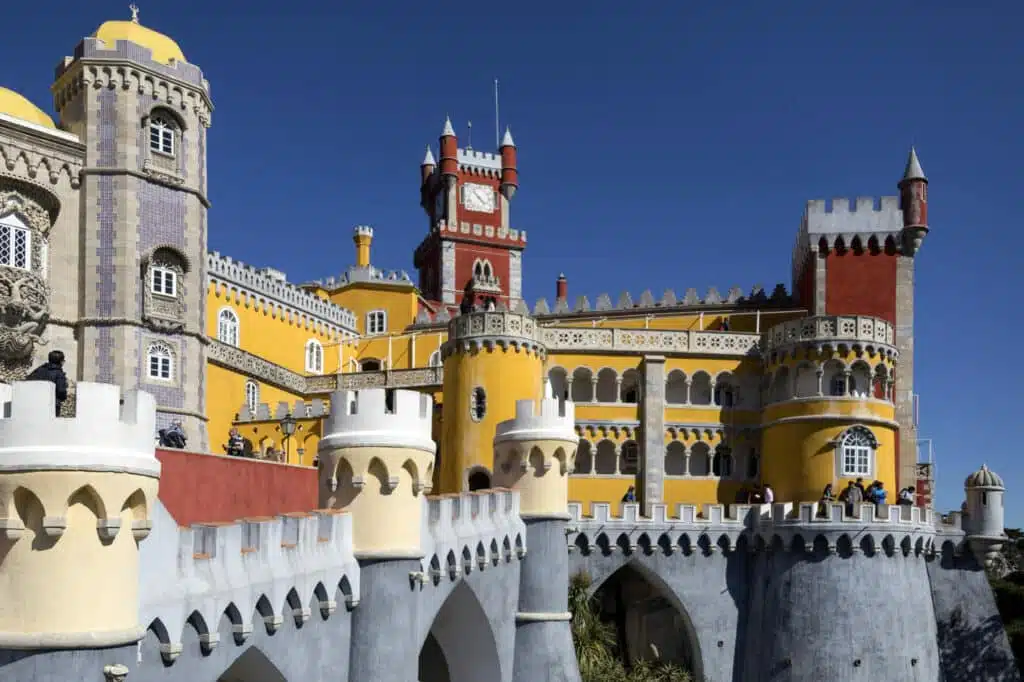
Pena Palace is one of Portugal’s most spectacular and recognizable structures. Perched on a rocky hill in Sintra, this romantic 19th-century palace looks like it’s straight out of a fairy tale, with its colorful walls, pointed towers, and elaborate ornamentation.
You probably didn’t know this, but Pena Palace was built by King Ferdinand II, a visionary and art-loving man who married Queen Maria II. Ferdinand, of German origin, brought the influence of German Romanticism to Portugal, creating a palace that is a unique blend of architectural styles: Gothic, Manueline, Moorish, and Renaissance.
Inscribed on the UNESCO World Heritage List in 1995, Pena Palace is one of Portugal’s most visited tourist attractions, drawing millions of visitors each year. The palace is particularly famous for its spectacular façade, richly decorated interiors, and magnificent gardens.
This comprehensive guide tells you everything you need to know about Pena Palace: its fascinating history, remarkable architecture, art collections, and all the practical details for planning your visit. Prepare to be amazed by one of Portugal’s most beautiful structures!
The history of Pena Palace begins long before its construction in the 19th century. The site on which the palace was built was once occupied by a monastery called the Monastery of Pena, founded in the 16th century. The monastery was a place of worship and spiritual retreat, perched on a rocky hill offering spectacular views of the surrounding area.
The monastery was built by monks to draw closer to God and to enjoy the serenity of the mountain. The site was considered sacred, and the monastery attracted pilgrims from all over the region. However, in the 18th century, the monastery began to decline, and eventually, it was abandoned.
In 1838, King Ferdinand II purchased the site of the abandoned monastery. Ferdinand, of German origin and passionate about Romantic architecture, had an ambitious vision: to transform the site into a Romantic palace that would be a refuge for the royal family and a symbol of the power of Portugal.
Ferdinand commissioned the architect Nicolau Montserrate to design the palace. Montserrate, a German architect, designed a palace that is a unique blend of architectural styles. The palace combines Gothic, Manueline, Moorish, and Renaissance elements, creating a unique structure unlike any other.
Construction of Pena Palace began in 1840 and lasted several decades. Hundreds of workers labored to build the palace, transporting building materials up the rocky hillside. The construction was a major challenge due to the difficult topography and the site’s isolation.
The palace is built using local stone, quarried in Sintra. The palace walls are painted in vibrant colors: yellow, pink, blue, and white. These bright colors are a distinctive feature of the palace and make it visible from afar.
Pena Palace was finally completed in 1885, after more than 40 years of construction. The palace became the favorite summer residence of the Portuguese royal family. The kings and queens of Portugal spent months at the palace, enjoying the serenity of the mountains and the beauty of the gardens.
After the 1910 revolution that abolished the monarchy in Portugal, the palace was transformed into a museum. Today, Pena Palace is one of Portugal’s most visited tourist attractions, drawing millions of visitors each year.
The first thing that strikes you as you approach Pena Palace is its spectacular facade. The palace is painted in vibrant colors: yellow, pink, blue, and white. These bright colors create a dramatic contrast with the surrounding rocky landscape and make the palace visible from afar.
The palace façade is adorned with pointed towers, crenellations, projecting balconies, and other elaborate ornamentation. Every architectural element was carefully considered to create an impression of grandeur and fantasy.
The interior of Pena Palace is just as impressive as the exterior. The palace contains over 150 rooms, each uniquely decorated. The rooms are furnished with elegant furniture, tapestries, paintings, and other works of art.
Main rooms:
You will appreciate Pena Palace and its magnificent gardens, which cover approximately 85 hectares. The gardens were designed to create a romantic and mystical atmosphere. The grounds contain centuries-old trees, fountains, sculptures, and winding pathways.
The gardens also offer spectacular views of the surrounding area. From here you can see the Moorish Castle, the villages of Sintra and, on a clear day, even the Atlantic Ocean.
Pena Palace houses an impressive collection of art and historical artifacts that will leave no one indifferent. The collection includes paintings, sculptures, furniture, tapestries, and other works of art dating from the 16th to the 19th centuries.
Main collections:
The Pena Palace is open to the public every day, so it will be easy for you to fit a visit into your trip:
Entrance fees:
| Category | Price |
| Adults | €14 |
| Children (6-12 years old) | €7 |
| Seniors (65+) | €7 |
| Students | €7 |
| Children (under 6 years old) | Free |
Address: Estrada da Pena, 2710-609 Sintra, Portugal
Transportation:
✅ Arrive early (before 10am) to avoid the crowds
✅ Book online if possible
✅ Wear comfortable shoes
✅ Bring water and sunscreen
✅ Late afternoon is best for photos
✅ Pick up an audio guide (€5) for more details
✅ Explore the gardens after the palace
The distinctive yellow color of Pena Palace has an interesting history. King Ferdinand II chose this color to make the palace visible from afar and to create an impression of grandeur and fantasy. This hue was also associated with royalty and power.
Pena Palace contains an underground well that supplied water to the palace. The well was an engineering marvel for its time, with a sophisticated pumping system.
As you might imagine, like many old palaces, Pena Palace is surrounded by ghost legends. Locals tell stories of ghosts haunting the palace, especially at night. While these stories are likely apocyphus, they add a mystical atmosphere to the palace.
Moorish Castle in Sintra – Medieval Fortress
Visiting Sintra from Lisbon – Complete Day Trip Guide
Visiting Cascais from Lisbon – Coastal Excursion
Visiting Lisbon in 4 days – Itinerary including Sintra
Complete Lisbon Guide – Back to the main guide